


THE HISTORY OF SAAB SCANIA
In the 1930s, the only Swedish aircraft industry was located in Linköping. It was a small specialized division of the Swedish Railway Workshops (Aktiebolaget Svenska Järnvägsverkstäderna, ASJ).
As the winds of war swept across Europe, Sweden needed to strengthen its military capabilities by creating its own aircraft industry capable of producing military planes for the armed forces.
In April 1937, Svenska Aeroplan Aktiebolaget, abbreviated as SAAB, was founded, with headquarters in Trollhättan, where all SAAB’s activities were initially concentrated.
In 1938, SAAB obtained a license to build the medium-heavy bomber Junkers Ju86K (B3) and began aircraft production.
The first Swedish-built B3 bomber was produced in Trollhättan just a few weeks after the outbreak of war on September 1, 1939.

The initial order from the Swedish government called for the delivery of 16 heavy bombers B3 (JU86 built under license), 102 light bombers B5 (Northrop 8A1), 260 P7 bombers (B17), 88 to 140 P8 bombers (B18) and 200 NA-16-4M training aircraft (Sk14 built under license)
In addition, having completed the construction and flight testing of a new fighter (the J21) and a new bomber, SAAB was required to deliver 210 and 176 units of each type respectively, within 33 months of the administration’s order.
SAAB developed the S17, produced in 322 units, designated either S17 or B17, depending on its role (S stood for reconnaissance and B for bomber in Swedish).

At the beginning of 1939, SAAB began designing the Saab 18 bomber, which was intended to replace the B3.

In 1941, designs for the J21 interceptor and attack aircraft were presented. It made its maiden flight on July 30, 1943, and was one of the first aircraft ever equipped with an ejection seat, since the propeller posed a danger if the pilot had to abandon the aircraft.
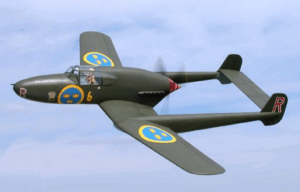
the first operational aircraft was delivered on December 1, 1945.
In 1944, two new projects began the Saab 90 Scandia, a twin-engine airliner

and the Saab 91 Safir, a trainer aircraft

As the end of the war approached, SAAB realized that military contracts would no longer be sufficient to keep its specialized workforce employed.
So, in 1946, the idea of building a front-wheel-drive, two-stroke car costing about 3,200 Swedish kronor ($1,100) was proposed. An annual production of 2,500 to 3,000 cars would absorb the production capacity of the Trollhättan plant.
Development of the car took place in Linköping, led by engineer Gunnar Ljungström with a team of about 20 people.
Since SAAB had no experience or tradition in car manufacturing, it relied on the common sense and technical, analytical, and innovative thinking of its personnel.
The first prototype, the original Saab 92001 (Ursaab), was neither aesthetically pleasing nor very practical.
Sixten Sason, then working with SAAB on technical drawings and aircraft radiography, was identified as the right person for the job.

Thus, on June 10, 1947, the first prototype of the 92002 model was presented to the Swedish public.
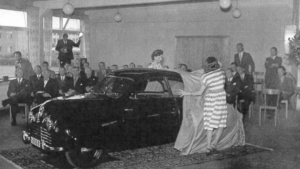

The declared top speed was 100 km/h, and the car was equipped with a 25-hp two-stroke twin-cylinder engine, mounted transversely.
Its shape was very advanced for the time and clearly inspired by aeronautical design.
With his design for the 92002, Sason introduced a style that would characterize Saab cars for the next thirty years.
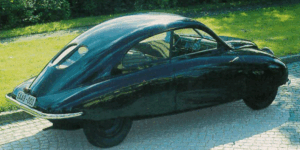
The car featured the “Saab hockey stick”, the nickname for the distinctive design of the C-pillar and the lower edge of the rear window, resembling the shape of an ice hockey stick. This became a stylistic hallmark adopted in most Saab vehicles and continued in later models.
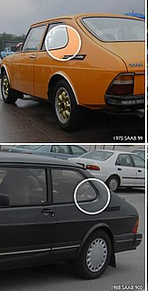
In 1953, the Saab 92B was introduced, easily recognized by its larger rear window, the fuel cap positioned on the rear fender, and a trunk lid that allowed access from the outside.
All Saab cars had abandoned the original bottle-green color by then.
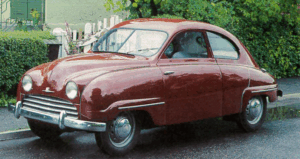
In the 1950s, the Armed Forces had purchased large quantities of cellulose-based green paint for camouflage.
However, the color proved unsuitable for Sweden’s forest green landscape (the equipment became easier to spot), and the paint was sold to Saab, who used it for a period on their vehicles.
However, the Saab 92 suffered from several shortcomings. I
t lacked a proper trunk, so luggage had to be loaded from the back seat it had poor rear visibility, the engine tended to overheat.
Saab owners were known for their patience. A book about the brand included this quote:
“Saab drivers saw themselves as an elite, stoically enduring the remarks of less enthusiastic motorists about its chugging, smoke, and poor rear visibility.”

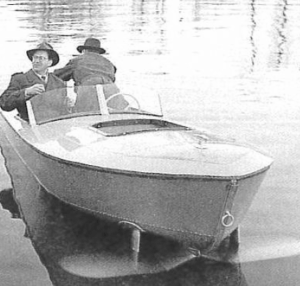
In 1947, Saab also ventured into a completely new field by producing 250 aluminum rowboats, some of which were sold in Africa.
They also developed a prototype hydrofoil, which never entered production.
The Saab J29 “Tunnan” (or “Flying Barrel”) made its maiden flight on September 1, 1948.
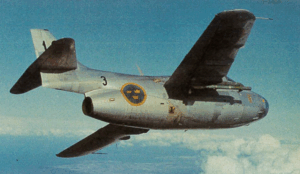
It was an interceptor and reconnaissance aircraft.
The pilot sat above the air intake like a rider on a horse, with the structure completed by a fuselage boom and tail section.
Its swept wings were a novelty for a European fighter.
It became one of the best aircraft ever built by Saab.
Driving a Saab 92, K.G. Svedberg won the Circuit of Östergötland Endurance Rally in December 1949, the same month the model went into production.
Just a month later, two Saabs entered the prestigious Monte Carlo Rally.
Greta Molander and Rolf Mellde earned Saab some of its first motorsport victories.
Driven by Svedberg / Rolf Mellde and Greta Molander / Margareta von Essen, the cars (chassis numbers 7 and 8) finished 69th and 55th, respectively.
Among the co-drivers of legendary rally driver Erik Carlsson was Mario Pavoni, a Swede of clearly Italian origin, who partnered with him in several rallies between 1957 and 1961.
The Saab 32 Lansen, an attack and reconnaissance interceptor, had its prototype’s maiden flight on November 3, 1952.
It was a truly impressive high-tech aircraft.

On October 25, 1953, the 32A became the first Swedish-built aircraft to break the sound barrier, making Sweden thefifth country in the world to achieve this important milestone.
On May 6, 1954, the J29 set a world record: piloted by Captain Anders Westerlund of the Uppland Wing, the aircraft reached an average speed of 977 km/h (607 mph) over a 500 km (311 mile) circuit.
The aircraft was a standard, unmodified J29.
The previous record of 950 km/h (590 mph) was held by a U.S. F86 Sabre.
In March 1955, the “Flying Barrel” set another world speed record, this time for aircraft flying in pairs over a 1,000 km (621 mile) circuit.
The reconnaissance version S29C reached an average speed of 900.6 km/h (559.6 mph), surpassing the previous 1950 record of 822 km/h (510.8 mph) set by a Gloster Meteor Mk 8.
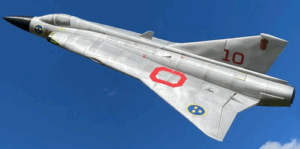
Meanwhile, development of a new supersonic aircraft had reached the first prototype flight stage: the 35 Draken, which would later be equipped with Saab RB05 attack missiles.

The inaugural flight of the first production Draken was scheduled for February 15, 1958.
On December 1, 1955, the Saab 93 was launched.

It had a longitudinally mounted 3-cylinder 33 hp engine, which offered more power despite a smaller displacement of 748 cm³.
The car debuted in the U.S. at the Great American Mountain Rally in 1956, where Saab entered three cars and won all overall, class, and team prizes.
The 1958 model, known as the 93B, was the first to feature a significant number of new enhancements, mainly to improve safety and performance.
An upgraded version called the GT750 was specifically designed for the U.S. market, targeting buyers interested in a sportier and more luxurious version of the standard 93.
The most significant upgrade was to the engine, modified to deliver 12 additional horsepower.
Of the 600 GT750 units produced, 546 were sold in the United States.
“Monster” was a stripped-down version with a 1.5-liter output achieved through two 748 cm³ engines.
The car was built to break the world speed record.
Although the attempt was technically successful (the car reached 198 km/h or 123 mph), the organizers forgot to appoint official record validators, and since the run was completed in only one direction, it was not recognized as an official record.
A final attempt ended with a transmission failure.
The twin-engine experimental car is now displayed at the Saab Museum in Trollhättan.
Saab cars were available with the optional ‘Saxomat’ clutch before the advent of automatic transmissions.
This system was controlled by a switch on the gear lever, requiring only the brake and accelerator pedals.
A separate lever was used to engage or disengage the freewheel.
In the mid-1950s, the first electronic computers designed for technical calculations were developed.
These digital machines were so large that they took up entire offices.
By the late 1950s, Saab began developing an onboard computer (originally called a “tactical calculator”).
The Saab D2 computer
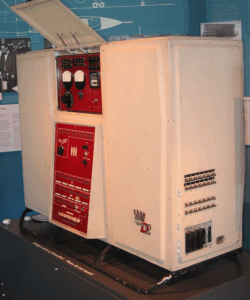
weighed 150 kg,housed around 6,000 transistors and could perform 40,000 operations per second, making it the fastest computer in Europe at the time.
For internal use, Saab installed the first computer designed solely for industrial purposes, a giant weighing 8 tons.
Other computers were developed for use in the Viggen, making the attack version the first operational aircraft in the world to be equipped with such a feature.
In 1956, Saab attracted great interest at the Stockholm Auto Show with its experimental model, the Saab Sonett Super Sport, powered by a Saab 93 engine.
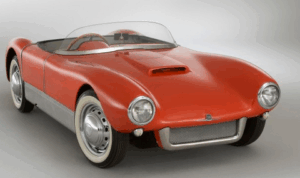
The car was designed exclusively for major rally circuits.
Built on an advanced box-section aluminum chassis, it used a 3-cylinder engine from the 93, modified to deliver 57.5 hp compared to the standard 33 hp.
The result was a winning combination of light weight and high strength.
The body was made of fiberglass-reinforced plastic, an innovative material at the time, and the complete car weighed just 500 kg (1,100 lb).
With a top speed of 160 km/h (about 100 mph) and capable of covering a kilometer in 36 seconds from a standing start, the new model was more than a match for its competitors.
Equipped with a hard top and a 4-speed transmission, it could reach 180 km/h (112 mph).
The initial series consisted of 6 cars, and the model was entered in several track competitions.
However, rally rules were later changed to allow modified production models to compete, making the older 93 suddenly competitive again.
Two of the six original models are now exhibited at the Saab Museum.
Three are owned by collectors, while the sixth was destroyed in an accident.
That same year, Middle East tensions, culminating in the Egyptian blockade of the Suez Canal, led to the first global oil crisis.
The previous year, Saab engineers had modified the Saab 92B to run on coal gas, using an improved version of the old Svedlund gas generator developed during the war.
In its modified form, the 92 could reach a top speed of 70 km/h (43 mph).
According to Len Lonnegren, Saab’s PR manager from 1963 to 1989:
“The typical Saab customer was a technically inclined, detail-oriented person who appreciated the car’s mechanics. Many came from engineering backgrounds or were small business owners or professionals. They read Popular Mechanics. And they were all very enthusiastic.”
A 1957 customer survey revealed that doctors made up the largest customer group, followed by sales managers and aerospace industry employees.
A significantly large group of amateur pilots ranked fourth.
Another survey, conducted about two years later, showed the most numerous group to be highly educated professionals: doctors, lawyers, engineers, and university professors.
In 1958, Saab signed an agreement with Sud-Aviation in Paris to build and sell the Alouette II turbine helicopter.
The first Swedish-built Alouette II made its test flight in May 1959.
Two aircraft had been built in less than a month.
In May 1959, after ten years as a car manufacturer, Saab expanded its range by introducing a station wagon model: the Saab 95.
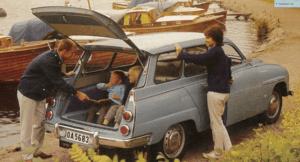
The first 95s were built using an eclectic mix of components then considered the best available, including the 841 cm³ engine and 4-speed transmission developed for the not-yet-launched 96, along with suicide doors and the dashboard from the 93.
A van version was also produced, with no rear seats or rear side windows.
In autumn 1960, Saab unveiled its third model to the press: the Saab 96.
It remained a “classic” Saab.
Although the front design remained unchanged, the rear half of the car was completely redesigned.
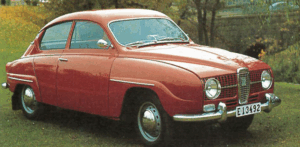
In 1965, the car was lengthened by 15 cm.
The 1967 Saab 96 was the first to be equipped with the new German-made Ford V4 four-stroke engine, producing 65 hp, with secret tests conducted in Desenzano, Italy by Rolf Mellde.
A new anti-theft feature required the gear lever to be in reverse for the driver to remove the key.
The most talked-about innovation of 1964 was an extremely rare safety feature at the time: a dual independent braking system.
Saab’s setup was unique, with the two circuits arranged diagonally: one operated the front left and rear right, the other the front right and rear left.
If one circuit failed, the car still had braking power on two wheels, keeping it straight and reducing skidding risk.
Production of the 96 ended in late 1979.
In 1960, motorsport enthusiasts welcomed with great enthusiasm the new experimental racing car built under Formula Junior regulations, which specified that all essential engine and chassis components had to derive from a production model of the same type.

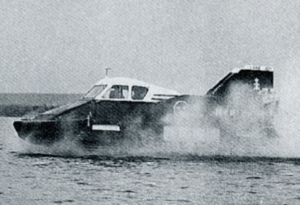
In 1961, Saab received an order from the Swedish Navy for the construction of an untested amphibious vehicle known as the Hovercraft (Saab 401), designed to operate on land, ice, and water. It was tested in 1963.
In the same year, Saab introduced seat belts as standard equipment in its cars—long before they were legally mandated.
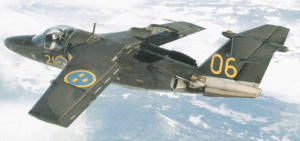
In 1963, Saab built its 200,000th car, delivered the first Falcon missile, and began testing the Saab 105 Sk 60, an aircraft for training, light attack, reconnaissance, and personnel transport, originally designed in 1960.
In 1966, the first Sonett II was unveiled in Stockholm.
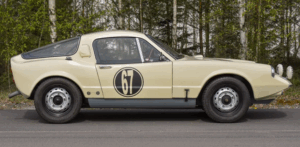
Thanks to the complete front opening, the car was exceptionally easy to maintain.
Equipped with triple carburetors, the engine (derived from the Saab 96 Monte Carlo) produced 60 hp.
It used a two-stroke engine, later replaced by a new four-stroke V4 engine introduced in the 96.
This change resulted in an unsightly bulge on the hood.
The Sonett III was redesigned by Swedish designers and Italian Sergio Coggiola.

In 1964, Saab developed the RB08 missile, and under the leadership of Ove Hammarström, engineers from Saab (in collaboration with Asea and LM Ericsson) began working on a satellite for scientific research.
The project was conducted under the auspices of the European Space Research Organization (ESRO), with the launch scheduled for 1967.
In 1965, although commonly known as Saab, the company officially changed its name to SAAB Aktiebolag.
In 1967, the Saab 99 was introduced.

Nicknamed “Toad,” the first “Gudmund prototype” appeared on Swedish roads in 1966.
It featured a widened 96 body mounted on a 99 chassis—perfect for hiding the transition from the two-stroke, 3-cylinder engine to the new four-stroke, 4-cylinder unit.
Because new designs had to be road-tested with a complete chassis, the “Toad” was built to mislead the curious press.
Despite skepticism, Saab finally abandoned the two-stroke engine, with the modified Ford V4 engine quickly proving successful.
On November 22, 1967, the Saab 99 was officially presented to the press in Stockholm.
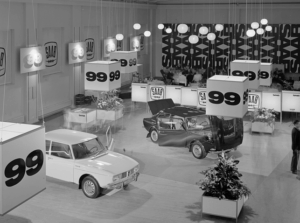
The car became available to the public in fall 1968 as a 1969 model.
In a feature article, Car and Driver wrote:
“Saab doesn’t build automobiles—it builds Saabs, vehicles that offer a highly distinctive and particularly logical solution to one of man’s transportation problems.”
The Saab 99 sold 19,411 units in Sweden in its first production year, placing fifth in new registrations.
In 1972, Teknikens Värld named it Car of the Year, citing:
“This award recognizes the attention to detail, which puts it in a class of its own.”
Innovations included a rear-placed ignition between the front seats, and shock-absorbing bumpers made from plastic blocks with “memory.”
Impacts at low speeds (up to 5 mph) would not damage the car or its bumpers.
Another notable feature introduced in 1972 was the electrically heated driver’s seat.
At the end of 1968, the boards of Saab Aktiebolag and AB Scania-Vabis (renowned for trucks and buses, with a diesel engine developed in 1936) decided to merge, forming Saab-Scania in 1969.
In 1975, a van version based on the combi coupé body was introduced, later called the “99 Van.”
Development efforts led to the launch of the Saab 99 Turbo in 1977, surrounded by secrecy.

Its 2-liter, four-cylinder turbocharged engine produced 145 hp, a revelation in 1978, especially compared to the BMW 320i with just 105 hp.
This car helped spark the turbo revolution in the auto industry.
The 99 Turbo Rally, unveiled on January 16, 1978, boosted engine power to 240 hp and torque to 369 Nm (273 lb-ft) at 3,500 rpm.
Saab withdrew from racing in 1980 due to regulation changes that allowed special cars built in limited numbers.
Introduced in 1974, the Combi Coupé combined the elegance of a sedan with the spaciousness of a station wagon.
In 1985, the model was so extensively modified that it was renamed the Saab 90,

adopting the rear design of the Saab 900 Sedan and being compatible with unleaded fuel.
Work on the Saab 37 Viggen, the successor to the Draken, began as early as 1952.
First flown in 1967, the multi-role aircraft was designed for attack, training, reconnaissance, and interception.
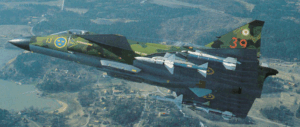
It could be prepared for its next mission in 10 minutes by five conscripts under a technician’s supervision.
Scania launched new products in 1969, including the LB80, 85, and 140 trucks, and the Metro-Scania bus.
The 140 was the most powerful road vehicle in Europe at the time, with a 350 hp Scania DS 114 diesel engine.
The 1969 merger prompted a reorganization into four divisions:
- Automotive Division – focused on environmental and safety improvements.
- Aerospace Division – focused on aircraft like the Viggen and Draken.
- Computer and Electronics Division – responsible for control systems and computers for industry and defense.
- Nordarmatur Division – specialized in instrumentation for industrial and power plant applications.
In 1971, Saab-Scania joined a consortium with BAC, MBB, and CASA to develop the Europlane, a commercial airliner.
Though never completed, the project contributed valuable experience later used in the SF340.
In 1971, Saab-Scania formed a consortium with British Aircraft Corporation, Messerschmitt-Bölkow-Blohm, and CASA (Spain) with the aim of developing a commercial airliner called Europlane.
Although the project never materialized, the studies provided valuable experience that was later applied to the design of the SF340.
In December 1971, Saab-Scania signed an agreement with the government to undertake the joint development of telecommunications and meteorological satellites. At the same time, in Australia, the European Space Research Organization launched a space probe equipped with equipment designed and manufactured by Saab-Scania.
In 1968, when Saab acquired Malmö Flygindustri (MFI), the Swedish Air Force was looking for a successor to the Sk50 Safir trainer aircraft, and the Army was planning to replace the Piper L-21Bs used for artillery observation and liaison operations.
At the time, MFI was developing an aircraft that made its maiden flight on July 11, 1969, which appeared to be ideal for both purposes.
It was the Saab MFI-17 Safari / Support.

In 1972, Saab-Scania launched satellites for northern lights studies and collaborated on the TD-1A launched from Vandenberg AFB.
Saab also began experimenting with steam engines and anti-lock brakes (ABS), the latter becoming standard 14 years later.
The Saab 98 was an attempt to bring the combi coupé concept to the 95/96, but never entered production.

The Saab 99 Turbo made its public debut at the 1977 Frankfurt Motor Show.
Saab was the first carmaker to adapt a turbocharger for mass production cars.
Scania had first used turbocharging in 1951 in rail buses and trucks.
In 1978, the Saab 900 debuted,
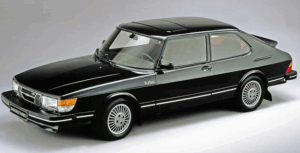
derived from the 99 hatchback but different enough to warrant a new name.
he bodywork, completely new, was designed by chief designer Björn Envall from the Trollhättan design department.
It featured a deeply curved windshield, much more steeply inclined than those found on most cars of the time, reflecting the brand’s aeronautical heritage.
The “combi coupés” were exceptionally spacious, and further emphasizing their aeronautical origin, the dashboard of the Saab 900 was curved to allow easy access to all controls.
Saab engineers positioned all the controls and indicators on the dashboard based on their frequency of use and/or importance, so that the driver would have to take their eyes off the road for the shortest possible time and at the smallest possible angle.
This is why the frequently used radio is positioned so high up in the dashboard. The steering column was telescopically collapsible thanks to deformable steel bellows. In the event of a collision, the steering wheel would retract away from the driver to minimize the risk of chest and head injuries.
The 1982 Saab 900 Turbo was the first model to be equipped with Automatic Performance Control (APC), a system that automatically adjusts engine performance according to the fuel’s octane rating.
The APC (Automatic Performance Control) is a feature that allows the vehicle to use fuel with an octane rating between 92 and 98.
Developed by Saab-Scania, the system consists of an electronic control unit that receives signals from three sources: the distributor, a knock sensor on the engine block, and a pressure sensor in the intake manifold.
As soon as knocking is detected, the control unit instructs the turbo to reduce boost pressure, eliminating the risk of engine damage.
The Saab 900 Turbo 16 was the first model to be equipped with this system.
This advancement attracted significant international attention.
In 1982, the German automotive organization AvD awarded Saab the prize for “the most important contribution of the year to safety,” referring to one of Saab’s features from that year: the part of the rearview mirror closest to the body is almost flat and is separated from the outer part, where the glass is convex to provide a wider field of view.
Few believed that Saab-Scania could balance its military and civilian activities before the end of the 1980s.
A similar situation occurred in the missile sector, where several major projects had been abandoned and some personnel reassigned.
At this point, however, Saab-Scania was fully committed to the sector, and all available resources were focused on the RBS15 anti-ship missile.
Although the Saab automotive division had improved compared to the previous year, the entire operation was still running at a significant loss, mainly due to the substantial resources spent on the development of the Saab 900.
In the automotive sector, Saab-Scania moved toward specializing in exclusive models that offered high standards of innovation, comfort, and safety, high-level performance, and low fuel consumption.
This event marked the triumphant entry of the Saab 900 Turbo into the global market.
The agreement with Lancia was extended to include the development and production of a completely new range of automobiles for the 1980s. (Saab had been involved in the development of Lancia’s latest model, the Lancia Delta, which was sold in Sweden as the Saab-Lancia 600.)
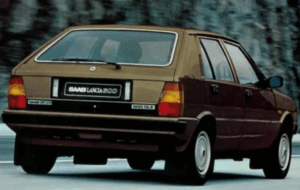
Saab and Fiat signed an agreement that allowed the Lancia Delta to be marketed in Sweden and Norway in 1980 under the name Saab 600. However, its bodywork suffered from serious corrosion problems, so it was no longer sold after 1982.
By the end of the 1960s, Sweden had become the second country in the world (after the Soviet Union) to equip its naval forces with surface-to-surface missiles.
The RBS15 can also be used for coastal defense.
The missile can be launched from autonomous batteries or used as an integral part of an overall defense system.
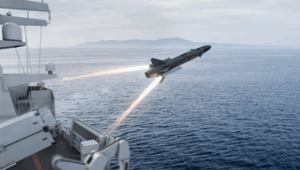
With a weight of 780 kg (1,720 lb), including boosters, the RBS15 is 4.35 m (14’3”) long and has a diameter of 0.5 m (1’7”), with a wingspan of 1.4 m (4’7”).
With a range of over 70 km (43 miles), this weapon nearly quintuples the offensive reach of the ship.
In 1986, Saab Missiles (founded in 1983) received an order to develop a mobile coastal defense version of the RBS15, confirming the Swedish Armed Forces’ ‘weapon family’ philosophy in the context of strategically important systems.
In 1980, Scania introduced an entirely new range of cab-over-engine trucks with a GVW (gross vehicle weight) between 16.5 and 36 tons. The design was based on a modular system that allowed vehicles to be built by assembling various combinations of components to meet specific transport requirements.
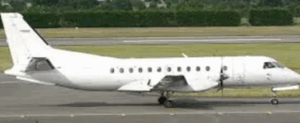
Derived from a military helicopter engine, the General Electric CT7-5A used in the SF340 is considered one of the most tested, economical, and easy-to-maintain power units available.
The SF340’s maiden flight took place on January 25, 1983.
Only seven simple tools are needed to disassemble and reassemble the engine.
The first aircraft was unveiled on October 27, 1982, during an impressive signing ceremony officiated by King Carl XVI Gustaf.
And on January 25, 1983, exactly three years after the agreement with Fairchild was signed, the SF340 made its first flight.
The first customer was the Swiss airline Crossair, which introduced the aircraft into scheduled service on June 14, 1984. The first passenger was Pope John Paul II.
In 1982, the Scania Division introduced two major new products: the 142 H intercooler engine with 309 kW (420 hp).
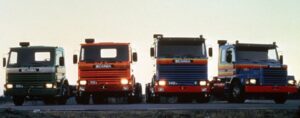
the most powerful standard truck engine in Europe, and a new generation of rear-engine buses for intercity and tourist transport.

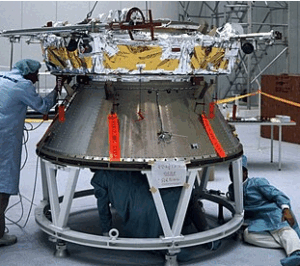
Saab Space produced telecommunications networks and control systems, computers, and other equipment for several joint European satellite and rocket programs, such as the Tele-X satellite.

On February 26, 1986, the Viking satellite was launched from the Kourou Space Center in French Guiana aboard an Ariane rocket.
The Logo Adopted Upon the Merger

symbolizes the Saab-Scania Group as a whole.
The Group’s long tradition as an automobile manufacturer is represented by the legendary griffin.
Vabis produced its first factory-made car in 1897, while the griffin first appeared on a Scania vehicle in 1901.
The space band symbolizes the company’s modern, high-tech profile.
The design was created by Carl Fredrik Reuterswärd, who commented:
“The symbol consists of a circle inscribed with two rings, transposed to form a cylindrical band and to create an impression of optical movement. Although presented from their own perspectives, Saab and Scania are seen as a single entity.”
Scania is the Latin name for the Swedish province of Skåne, where Maskinsfabriks AB Scania was founded in Malmö in 1900.
The first car produced by the company proudly displayed the griffin taken from Skåne’s provincial coat of arms.
During its first 20 years as an automaker, Saab produced only relatively small vehicles.
However, the Saab 99—the first of the larger models—was introduced in 1967, laying the groundwork for the development of a more upscale, sportier image. This trend continued with the launch of the 99 EMS, 99 Turbo, and 900 models.
Well before the final phase-out of the 900, Saab recognized the need for a replacement model.
However, the complexity and cost of developing an entirely new vehicle proved to be prohibitive.
Fiat was also looking for a partner to reduce the cost of designing and launching new models, so the two companies joined forces, launching the project known as Tipo 4.
The idea was that the platform developed during the project would underpin four different vehicles: one Saab, one Alfa Romeo, one Fiat, and one Lancia. The cooperation agreement was signed at the beginning of 1979, and work began on the new cars.
The Alfa Romeo 164 was designed by Pininfarina, while the Fiat Croma, Lancia Thema, and Saab 9000 were all the work of Giugiaro’s Italdesign studio.
Initially, the partnership worked well, but over time, disagreements between the engineers led to friction, and in the end, very few components were interchangeable among the models.
By 1981, the partnership had simply fallen apart.
It is said that the cooperation ended when the crash test results were released.
By Fiat’s standards, the results were acceptable; according to Saab, they were “not acceptable at all.”
The truth is, Saab was focusing on the American market, concerned with the strict U.S. crash test regulations, while Fiat and Lancia were withdrawing from the American market and were content to meet the less demanding European standards.
Saab decided to go it alone with the Saab 9000.
The final product was thus different from Fiat vehicles, though it retained some component similarities.
For example, the doors seemed interchangeable at first glance.
However, because Saab included stronger side-impact protection inside the doors, they were not compatible with Fiat cars.
The Saab 9000 Turbo 16 was unveiled in May 1984, and the first customers received their vehicles during the winter of 1984–85.
The model successfully combined the practical benefits of a station wagon with the comfort of a sedan.
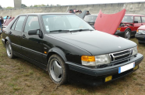
The 9000 was also judged to be one of the most spacious cars in the world among those tested under Swedish Autograph standards, which were recognized and applied internationally.
In 1985, the concept car “Saab 900 Turbo EV-1” was unveiled — an experimental model by Saab-Scania. It featured front and rear impact protection made from composite materials.
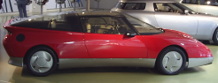
The car was taken to the track, and thanks to its aerodynamics, a curb weight of 1,150 kg, and increased power output, it reached a top speed of 270 km/h. Acceleration from 0 to 100 km/h took just 5.7 seconds, and it covered 1,000 meters from a standing start in only 24.8 seconds.
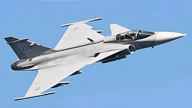
The JAS 39 Gripen prototype flew for the first time in 1988 and entered service in 1996.
In 1986, the series production of the Saab 900 Cabriolet began at the Saab-Valmet plant in Finland.
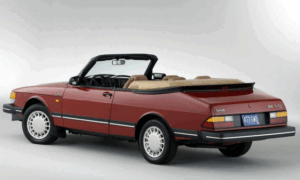
The production version was first showcased at the Chicago Motor Show, the largest event of its kind in the USA. Another development that year was the Saab 9000i, featuring a 2-liter, 16-valve engine with fuel injection, delivering 95.5 kW (130 hp), presented in Geneva.
That same year, Björn Envall wanted to create an open-top version to support the launch of the new Cabriolet. To do so, he teamed up with Leif Mellberg, an independent coachbuilder. Since the management refused to fund the project, the necessary financing was secured through the Swedish automotive magazine Teknikens Värld.
This two-seater roadster was based on the technical platform of a 900 Turbo 16 S, with the engine power increased to around 250 hp.

In March 1989, SAAB France launched the limited-edition Yacht Club based on the combi-coupé version, equipped with the new naturally aspirated 16-valve four-cylinder engine producing 133 hp.
In collaboration with the Yacht Club magazine, SAAB decided to celebrate the sponsorship by marketing a limited series of 70 units, distinguished by the Embassy Blue and Ultra Marine color tones. A “Yacht – Club” decal was applied to the rear spoiler.

The maxi-catamaran Elf Aquitaine II, 20 meters long, with Marc Pajot as skipper and an impressive track record, was acquired by François Boucher in 1988.

Sponsored by the Swedish manufacturer, it was renamed SAAB Turbo.
Finally, in the same year, General Motors acquired a stake in Saab Automobile AB, marking the beginning of the end for Saab-Scania.
Merging luxury brands with generalist ones and making them share platforms has never worked.
Sources:
- Gunnar A Sjögren – 1984 The Saab Way, Tryckeri AB, Sweden
- Saab Scania AB – 1987 The Saab Scania Story, Streiffert & Co., Sweden
- Anders Tunberg – 1980 From Two-Stroke to Turbo, Motor Racing Publications Ltd.
- Brian Williams – 2012 Saab: A Short Story, Salim Bouzekouk
- Aurélien Gueldry – Saab 900 Top Model, ETAI, 2021